
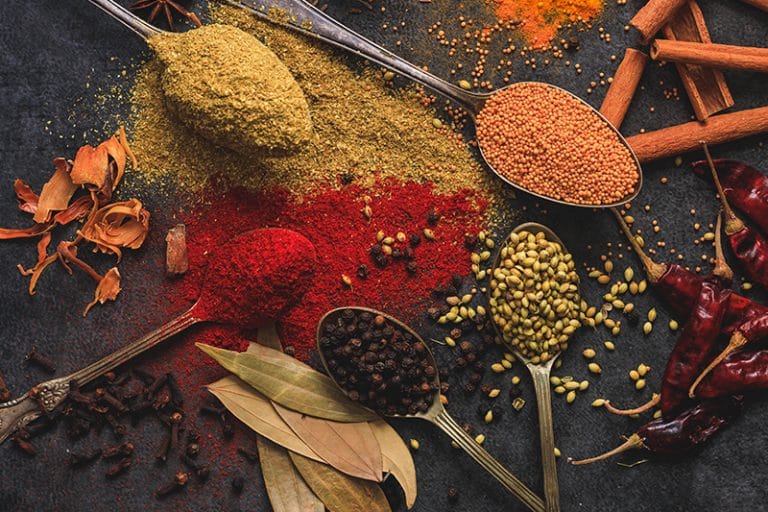
Three of the most flavorsome Mexican spices to taste are epazote, cumin and Mexican oregano. Epazote is a pungent herb with a flavor all its own, cumin brings warm and earthy depth, and Mexican oregano adds a bright, citrusy, slightly peppery note that’s bolder than the oregano most people keep at home. Each one tastes like nothing else on the shelf, and each one plays a different role in the kitchen.
If you want the wider picture first, our overview of the spices that go into Mexican food covers garlic, onion, chiles, cinnamon, cilantro and the rest of the pantry. These three deserve a closer look.
What does epazote taste like?
Epazote is hard to describe, which is part of its charm. People reach for all kinds of comparisons: anise, mint, citrus, oregano, even something closer to turpentine or gasoline. That last one sounds like a warning, but cooks who love epazote say the strong, resinous smell mellows out once it hits a hot pot, leaving a savory, herbal flavor that’s hard to replace.
The name comes from Nahuatl, the language of the Aztecs, and the translation you’ll see most often connects it to the smell of a skunk. That tells you something about how forceful the fresh leaves can be. The plant grows almost like a weed, popping up in empty lots and garden edges in Mexico and across parts of the United States.
Fresh epazote has the most flavor. Dried epazote is easier to find in stores outside Mexico, but it loses much of its punch, so cooks often use more of it or skip it in recipes where it would be the star.
How is epazote used in Mexican cooking?
Its most famous partner is the pot of black beans. In central and southern Mexico, a sprig of epazote often goes into the beans near the end of cooking. There’s a long-standing kitchen belief that it makes beans easier on the stomach. We’ll leave the science on that one to someone else, but plenty of cooks wouldn’t make beans without it, mostly because they like the flavor.
Epazote also goes into quesadillas in and around Mexico City, where a fresh leaf is often tucked in with the cheese. It flavors some versions of sopa de tortilla, mushroom dishes, and esquites, the cups of seasoned corn sold by street vendors. A little goes a long way. Most cooks add it late, since long cooking can turn it bitter.
Epazote is more common in central and southern Mexican cooking than in the Mexican food most people in Colorado grew up with, so if you’ve never tasted it, you’re in good company. Look for it fresh at Latin markets if you want to try it at home.
Why is cumin used in Mexican food?
Cumin is the most familiar of the three to most Americans. The seeds come from a small plant related to parsley, and the spice originated far from Mexico, around the Mediterranean and the Middle East. It reached Mexico with the Spanish and found a lasting home, especially in the north.
The flavor is warm, earthy and a little bitter, with a smell that many people associate with chili con carne and taco seasoning. That association makes sense. Cumin tends to play a bigger role in northern Mexican and Tex-Mex cooking than in central and southern Mexico, where many cooks use it lightly or leave it out. Too much cumin can take over a dish, so a pinch is usually the right amount.
Cooks who want the most from it toast whole seeds in a dry pan for a minute or two, until they smell nutty, and then grind them. Toasted cumin tastes rounder and less dusty than the pre-ground jar. It pairs naturally with garlic, dried chiles and slow-cooked meats, and it’s one reason a pot of red chile sauce can taste so deep.
How is Mexican oregano different from regular oregano?
Here’s the surprising part: Mexican oregano isn’t closely related to the oregano used in Italian and Greek cooking. Mediterranean oregano belongs to the mint family. Mexican oregano comes from a different plant in the verbena family, which also includes lemon verbena. They share a name because they share a general herbal, savory quality, but they don’t taste the same.
Mexican oregano is stronger, with citrus and earthy notes and a hint that some people compare to licorice. It stands up well to chiles and cumin, which makes it a good fit for robust dishes. It’s a common seasoning in beans, salsas, soups and stews. In many homes, a small dish of dried oregano is set out with pozole or menudo along with chopped onion and lime, so everyone can season their own bowl. If you’ve had menudo, which you’ll find on our menu, that’s the kind of tradition it comes from.
The classic way to use it is to rub the dried leaves between your palms right over the pot. The friction wakes up the oils and releases the smell. If a recipe calls for Mexican oregano and you only have the Mediterranean kind, it’ll work in a pinch, but the flavor will be milder and a little sweeter.
Where can you taste bold Mexican flavor in Aurora?
At El Chubby’s, the flavor we’re proudest of is our green chili, made fresh every day. We offer three chili choices, hot green, mild green and red, and the hot green is what we’re best known for. You can have it inside a burrito, smothered over the top, or on a burger, and everything is made to order, so you can have it on the side if you’d like to control the heat yourself.
For a tour of the menu, start with our specialties. Our carne asada is thin strips of steak grilled with jalapeños, onions and tomatoes, and Carne Asada Fries is our signature dish. If you want a little of everything, the combination plates come with rice and beans made in the pot. You’ll find our full lineup on the El Chubby’s menu.
We’ve been part of the Aurora neighborhood at 1191 S Abilene St since 1991, serving breakfast, lunch and dinner with dine-in, takeout and a drive-thru. If you’re staying in, order online for pickup or delivery, and come hungry.
